Personal Training, Corporate Wellness, Bootcamp, Spin Classes in Ruddington, West Bridgford and Nottingham.
Corporate Massage
Tuesday, 24 June 2014
Wednesday, 11 June 2014
Choosing the right foods, Food labels explained
Food labelling Descriptions:
Most
pre-packed foods have a nutrition label on the back or side of the packaging.
These labels
usually include information on energy in kilojoules (kJ) or kilocalories
(kcal), usually referred to as calories.
They also include information on protein, carbohydrate and fat.
They may provide additional information on saturated
fat, sugars,
sodium and salt.
All nutrition information is provided per 100 grams and sometimes per portion
of the food.
Supermarkets
and food manufacturers now highlight the energy, fat, saturated fat, sugars and
salt content on the front of the packaging, alongside the reference
intake for each of these.
You
can use nutrition labels to help you choose a more balanced diet. For a
balanced diet:
·
cut down on fat (especially saturated fat), salt and added
sugars
·
base your meals on starchy foods such as
potatoes, bread, pasta and rice, choosing wholegrain where possible
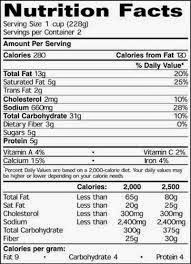
Nutrition labels
on the back or side of packaging
Nutrition
labels are often displayed as a panel or grid on the back or side of packaging.
This
type of label usually includes information on energy (kJ/kcal), protein,
carbohydrate and fat. It may also provide additional information on
saturated fat, sugars, sodium, salt and fibre. All nutrition information is
provided per 100 grams and sometimes per portion of the food.
How do I know if a food is high in fat, saturated fat, sugar
or salt?
There
are guidelines to tell you if a food is high in fat, saturated fat, salt or
sugar, or not. These are:
Total fat
High: more than 17.5g of fat per 100g
Low: 3g of fat or less per 100g
High: more than 17.5g of fat per 100g
Low: 3g of fat or less per 100g
Saturated fat
High: more than 5g of saturated fat per 100g
Low: 1.5g of saturated fat or less per 100g
High: more than 5g of saturated fat per 100g
Low: 1.5g of saturated fat or less per 100g
Sugars
High: more than 22.5g of total sugars per 100g
Low: 5g of total sugars or less per 100g
High: more than 22.5g of total sugars per 100g
Low: 5g of total sugars or less per 100g
Salt
High: more than 1.5g of salt per 100g (or 0.6g sodium)
Low: 0.3g of salt or less per 100g (or 0.1g sodium)
High: more than 1.5g of salt per 100g (or 0.6g sodium)
Low: 0.3g of salt or less per 100g (or 0.1g sodium)
Nutrition labels on the front of packaging
Most
of the big supermarkets and many food manufacturers also display nutritional
information on the front of pre-packed food. This is very useful when you want
to compare different food products at a glance.
Front-of-pack
labels, such as the label in the above image, usually give a quick guide
to:
·
fat content
·
saturated fat content
·
sugar content
·
salt content
These
labels provide information on the number of grams of fat, saturated fat, sugars
and salt, and the amount of energy (in kJ and kcal) in a serving or
portion of the food. Be aware, however, that the manufacturer's idea of a
portion may be different from yours.
Reference intake (RI)
Nutrition
labels can also provide information on how a particular food or drink
product fits into your daily diet. Reference
intakes are guidelines about the approximate amount of particular nutrients
and energy required for a healthy diet. Because individual requirements
for energy and nutrients are different for all people, RIs are not
intended as targets. Instead they are intended to give a useful indication of
how a particular nutrient or amount of energy fits into your daily diet.
Information
on the RI and the contribution a nutrient makes towards a RI
(expressed as a percentage) can usually be found on the back or side of
packaging. The percentage RI can also sometimes be repeated on the
front of the pack.
For
example, the label above shows that each pie will provide
you with 19.2 grams of sugars, which represents 21% of your RI for
sugars. In other words, this pack contains about a fifth
of an adult's RI of sugars.
Unless
otherwise specified on the packaging, the percentage RI values are based
on an average-sized woman doing an average amount of physical activity. This is
to reduce the risk of people with lower energy requirements eating
too much, as well as to simplify the labelling process.
Reference intakes for energy, total fat, saturates, sugars
and salt
·
Energy: 8,400kJ/2,000kcal
·
Total fat: 70g
·
Saturates: 20g
·
Sugars: 90g
·
Salt: 6g
Red, amber and green colour-coding
Some
front-of-pack nutrition labels use red, amber and green
colour-coding.
Colour-coded
nutritional information, as shown in the image above, tells you at a glance if
the food has high, medium or low amounts of fat, saturated fat, sugars and
salt.
·
red means high
·
amber means medium
·
green means low
In
short, the more green(s) on the label, the healthier the choice.
If
you buy a food that has all or mostly green(s) on the label, you know straight
away that it's a healthier choice. Amber means neither high nor low, so you can
eat foods with all or mostly amber(s) on the label most of the time. But any
red(s) on the label means the food is high in fat, saturated fat, salt or
sugars and these are the foods we should cut down on. Try to eat these foods
less often and in small amounts.
Ingredients list
Most
pre-packed food products also have a list of ingredients on the packaging or on
an attached label. The ingredients list can also help you work out how healthy
the product is.
Ingredients
are listed in order of weight, so the main ingredients in the packaged food
always come first. That means that if the first few ingredients are high-fat
ingredients, such as cream, butter or oil, then the food in question is a
high-fat food.
Corporate Wellness Programs - Why
So what is a healthy workplace?
A healthy workplace implements workplace health programs and policies to create a supportive culture and physical environment that encourages healthy lifestyles. It is also characterised by employees and employers working together to support and promote the health and wellbeing of people.
What is a workplace health program?
A workplace health program refers to activities undertaken in the workplace that support the health and wellbeing of employees. These activities may focus on individual behaviour change (e.g. education sessions or physical activity classes), and/or they may be targeted at an organisational level, creating policies and environments (physical and social) which support healthy behaviours (e.g. healthy catering policy or active transport end-of-trip facilities).Why promote a workplace health program in your workplace?
There is increased awareness regarding the value of workplace health programs that support the health and wellbeing of employees. Organisations that have implemented workplace health programs have reported positive business outcomes such as improved employee retention and productivity, among other benefits.What are the benefits for your organisation? Research shows there are many measurable benefits to organisations and employers in implementing workplace health programs, including increased workplace productivity, reduced absenteeism, improved employee satisfaction, improved employee recruitment and retention, improved employee engagement and reduced worker’s compensation costs.
Benefits of a healthy workplace for employers
Improve work performance and productivity Reduce absenteeism and sick leave
Decrease frequency and costs of worker’s compensation
Improve employee morale, satisfaction and motivation
Improve corporate image and attraction/retention of employees
Increase return on training and development investment
Improve employee engagement and employee relation
Monday, 31 March 2014
10 Reasons to ditch the Microwave
Almost every house in the UK will have a microwave oven. For obvious reasons, they cook food fast and require very few skills to create a worth while meal. In a society where every minute counts and convenience food is key the microwave was always going to be a hit.
However what the makers keep to themselves is the overwhelming evidence from research in Switzerland, Germany and Russia that microwaves can:
1) Causes long term brain damage by shorting out electrical impulses. de-polarizing or de-magnetizing the brain tissues.
2) The human body cannot metabolize the unknown bi products created in microwaved food
3) Male and female hormone production is shut down and/or altered by continually eating microwaved food
4) The effects are long term
5) Minerals, vitamins and nutrients are destroyed or altered during cooking. some of which the human body gets no or little benefit from.
6) The minerals in vegetables are turned into cancerous free radicals
7) Microwaved foods cause stomach cancerous growths
8) Increases the number of cancerous cells in the body
9) Continual use causes immune system deficencies through lymph gland and blood serum alterations
10) Eating microwaved food causes loss of memory, concentration, emotional instability and a decrease of intelligence
We are not for one minute advocating ditching the microwave. We fully appreciate that for many this is simply not practical. What we suggest though is that each time you do use it, you ask yourself a question, could I grill, boil or bake this instead.
Tuesday, 18 March 2014
Portion Sizes
So you now know what you are eating but what is a Portion Size?
Here are outlined recommended portion sizes and amounts for an average adult aiming to maintain his or her weight. If you’re aiming to lose excess weight, you will need to eat fewer portions than this.
Starchy foods
Eight to 10 portions per day (to maintain weight for an
average adult, depending on activity level – we have learnt that starchy foods
are our main source of energy and should form the basis of every meal. Here are some examples of starchy foods and
portion size guidelines:
A day’s amount may include nine tablespoons of cereal for
breakfast, a sandwich for lunch and six tablespoons of rice with dinner. Remember try to go for wholegrain or wholemeal
versions of starchy foods as they are likely to keep you feeling fuller for longer.
And if you decide to include most of your day’s quota of
starchy foods in one meal, cut down throughout the rest of the day.
Meat, fish and other proteins
Three portions per day – with at least one portion of oily
fish a week
This group includes non-dairy sources of protein, which is
important for growth and repair. Try to include one portion in at least two of
your daily meals. One portion counts as the following.
A day’s worth from this group might
mean two eggs with breakfast and a piece of fish for dinner; or a chicken salad
for lunch and half a tin of baked beans with dinner. Try to limit your intake
of red and processed meat.
Dairy
Three portions a day
Dairy foods contain calcium for healthy bones and teeth,
and are also a good source of protein. Try to include one portion with every
meal, and go for lower-fat options when you can however do remember that
sometimes in low fat yoghurts there can be higher in sugar so you could have a
full fat yoghurt in a smaller portion or in moderation!
A portion includes the following.
The milk on your cereal and in your tea all counts. Go for
lower-fat cheese and yoghurts, and skimmed or semi-skimmed milk. These contain
just as much calcium as full-fat versions.
Fruit and vegetables
At least five portions a day this is just the recommended
minimum amount that was agreed in war time to ensure people kept off scurvy and
some nutrition experts actually say it should be nearer 8-10!
One portion is 80g of any fruit or vegetable. Examples
include:
Have a glass of fruit juice with your breakfast and snack
on fruit throughout the day. If you have a sandwich at lunchtime, including
some salad will contribute towards another of your five a day.
Fat and sugar
Limit your intake of these foods
Foods high in fat include butter, cream, chocolate and
cakes. Foods and drinks high in sugar include soft drinks, sweets and biscuits.
You should only eat foods from this group sparingly unless as we discussed in
the weeks before it is a good fat for example seeds, avocado’s, tbsp. olive oil
on salads etc.
Tips for cutting down portions sizes
Many people are surprised when they realise what a typical
portion size should look like. If you’re used to piling your plate high with
pasta or filling your bowl to the brim with cereal, it can come as quite a
shock. But once you cut down, you’ll soon get used to eating less.
Here are some general pointers if you think you need to cut
down portion sizes.
- Use smaller plates or bowls for your meals. A small plate full of food is much less disheartening than a large plate that’s half empty.
- You don’t need to cut down on your fruit and vegetables if you’re trying to lose weight. So if your plate is looking a bit sparse, fill it up with vegetables up to 50% of the plate could be vegetables to really ensure you are running your body at its healthiest! And if you’re craving a mid-morning snack, go for a piece of fruit.
- Think about everything you eat during the day. It’s easy to forget the biscuit you had with your tea at work or extra slice of cheese in your sandwich.
- Counting calories and weighing food is no fun and hard to keep up. Instead, compare what you usually eat against this guide for a week or so and you can start to identify areas where you’re eating more than you should.
Monday, 10 March 2014
Nutrition - Body Fat
Body Fat and Your Ideal Weight
All diets and healthy eating plans usually focus on weight
loss, and there is a general acceptance that the closer you are to your ideal
weight, the healthier you will be, the less risk of life-threatening and
dehabilitating diseases. However, weight
is only a small part of the picture.
Your lean muscle tissue is important as well hence along this learning
journey we have stressed the importance of not just making healthier tweaks to
the way you see and eat food but you make time to exercise .* Vital body
organs, such as your heart, liver and kidneys, need to be supported by lean
tissue, as does your whole body and that is why fitness is so important. When we exercise we shape up on the inside as
well as the outside.
Muscles use up more glucose, and therefore calories than fat
meaning that lean muscle burns fat. This
means that if you are heavy but fit; your weight may not be as much as a
problem as you think. On the other hand
if you are thin, but lightweight and lacking in muscle tone you may not be as
fit as you think! That is why today when
we take your measurements and weight/body fat
you can use your body fat percentage to make a more accurate score of
your health than the weight.
Body Fat Guidelines
Visceral Fat Guidelines
(1-9% = good, 10-14% = Risk, 15-59% = High Risk)
Eat Good Fats, Avoid Bad Fats
Some fats are essential to health, which is why we have an
instinct to eat fat. The body’s ‘fat
sensors’ are in your mouth – and we are instinctively drawn towards the creamy
textures of fat, sauces, cheese and cream hence fat-free diets being a struggle
for us. There are good fats and bad fats
in food and only when you start to eat “good fats” does your body stop craving
bad fats.
Good Fats
The good fats are essential fats listed on packets as polyunsaturated
and are found in seeds, flaxseeds, grains and oily fish. They include the essential fatty acids
(EFA’s) such as omega-3 and omega-6.
These fats are essential to health and can help you lose weight. There are two reasons for this – firstly your
body craves essential fats and secondly they help your metabolism top work
properly; improve the effectiveness of the brain and the nervous system, they
boost immunity, balance hormones and create healthy skin.
Your body and brain depend on Omega-3 and Omega-6 essential
fats. One quarter of your brain is made
up of Omega-3’s and a lack of essential fats can lead to lower IQ, poor memory
and a tendency to depression. Your
hormone balances changes, possibly leading to mood swings, PMS, sugar cravings
and weight gain. Your skin dries and
your heart and arteries suffer and that’s why these fats are called
essential. The Omega- 3’s not only
boosts your metabolism they reduce the risk of heart disease and sudden heart
attack and halve your risk of ever suffering from Alzheimer’s disease.
Good Food Sources
Fat Family Good Dietary Sources
Omega 3 Fish, especially salmon, mackerel,
herring, tuna and sardines, flaxseeds, pumpkin seeds, walnuts and there oils.
Omega 6 Sunflower, sesame and
pumpkin seeds and their oils; also sunflower oil, corn oil and soya oil
Omega and 9 Olive Oil, almonds walnuts
Bad Fats
The “bad fats” are non-essential fats listed on packets as
saturated fats, trans-fats and hydronated fats and can be found in meat, dairy
products, processed, fried and junk foods.
Eating bad fats leaves you unsatisfied, so you’ll find yourself craving
more fats as your body as received the good fats that it needs.
Bad fats feature heavily in the average Western Diet and are
bad news for your heart, your weight and arteries. They contribute to diseases such as cancer,
diabetes and coronary heart diseases as well as heavy weight gain. If you eat all these fats and don’t burn them
off immediately, all your body can do is store them as unhealthy fat. Worst of all are the trans-fats and
hydronated fats as these are the real ugliest - these have been processed,
fried or damaged. When the molecules of
essential fats are altered by food processing or frying they set up a reaction in
the body that can damage the cells most commonly seen when using margarine or
olive oil in cooking and that is why they as well as crisps, biscuits,
ready-meals and fried foods are bad for you.
There is also an in-between fat (mono-unsaturated); omega-9. Olive Oil is a good source of this when
drizzled in small quantities onto food whereas this is nowhere as good for you
as the essential good fats, neither as bad for you as essential bad fats.
Foods to Avoid
Foods rich in bad fats include: French fries, hamburgers, deep fried goods,
nuggets, confectionery, chocolate bars, potato and corn chips. Crisps, biscuits
cakes, margarine, mayonnaise and most salad dressings. Unfortunately, many vegetarian processed foods
are also high in these hydrogenated fats.
Check the label – if it stated “hydrogenated vegetable oils” do not buy
it!
Foods to Enjoy
The omega-3 essential fats, found in flax and pumpkin seeds,
and oily cold water fish such as mackerel, herring, salmon and tuna help keep
weight at bay in a number of ways. They
help make hormone-like substances called prostaglands, which help control
metabolism and fat burning. They also
help to limit the potential damage to arteries caused when eating too many bad
fats or sugary bursts of high glucose into the blood. Good sources of fats also include avocados
although limit to ½ per day as with all fats they are calorific too and should
be eaten in moderation.
The omega-6 essential fats, found in hot climate seeds such
as sunflower and sesame, have similar health benefits to the omega 3’s and are
especially good for the skin and maintaining hormone balance, for example
combating pms.
Wednesday, 5 March 2014
What is Nutrition
What is Nutrition?
Optimum Nutrition or put simply Healthy Eating means giving
your body the best possible intake of nutrients to allow it to be as healthy as
possible and to work as well as it can.
Why is Nutrition /Healthy Heating Important?
·
Provides the body with the necessary nutrients
to carry out basic functions of the body
·
Improve your clarity and concentration
·
Increase your IQ
·
Enhance your physical performance
·
Improves your quality of sleep
·
Increase your resistance to infection
·
Protect you from Disease
·
Slows down the ageing process
·
More than halves your risk of cancer, heart
disease, diabetes, stroke, osteoporosis and arthritis
·
Reduce obesity and manage normal weight
Knowing what you are eating?
Every morsel of food provides dozen of active ingredients
that can promote or damage your health.
The most important of these ingredients are the essential ones – the
ones you need to survive and be healthy.
These nutrients include:
·
Water
·
Carbohydrates
·
Proteins
·
Essential Fats
·
Vitamins
·
Minerals
Water, Carbohydrates, Protein and
essential fats are classified as “macronutrients” because we need a lot of
them. We need vitamins and minerals in
relatively smaller amounts, so they are called the “micronutrients”.
Vitamins in Food
Although vitamins are needed in
much smaller amounts than fat, protein or carbohydrate, they are no less
important Vitamins balance hormones,
produce energy, boost the immune system, make healthy skin, protect the
arteries, and keep the brain and the nervous system (just about every part of
the body) working well.
Minerals in Food
Minerals, like vitamins, are
essential for just about every bodily process.
Calcium, Magnesium and phosphorous help build our bones and teeth. Nerve signals (vital for communication
between the brain and muscles) depend on calcium, magnesium, sodium and
potassium. Zinc is vital for all
physical repair, renewal and development.
Selenium and Zinc help boost the immune system.
Knowing what You’re Eating
Achieving an optimal intake of
each vitamins and minerals is a big step in being healthy:
·
Fruits and vegetables provide most of your
vitamins and minerals (except vit D and B12)
·
Meat, Fish, Eggs and dairy products provide
vitamin D and B12, among other nutrients
·
Dairy Products are good for calcium, but poor
for other minerals
·
Seeds and nuts are great sources of minerals
(and essential fats)
·
Processed and refined foods are low in nutrients
– Understanding Clean and Lean
Another important element of your
diet is fibre. Fibre isn’t classed as a
nutrient, but it’s essential to keep your digestive system healthy and certain
types of fibre can help to control your blood cholesterol levels.
Defining the Perfect Diet
You need to eat a range of foods to get all of the nutrients
and fibre your body needs. The five main
groups are:
Fat
Your body needs some fat to survive and function properly. Fat provides many essential functions such as
supporting cell growth, providing the body of energy, maintaining body
temperature, protecting organs, producing hormones and absorbing certain
nutrients.
There are two main kinds:
Saturated (hard) fat and unsaturated fat. Saturated fat is not essential – we should
eat it in moderation. Saturated fat is
typically solid at room temperature and occurs naturally in many foods but the
majority come from mainly animal sources, including meat and dairy products,
clear examples are fatty beef, lamb, pork, lard and cream, butter and
cheese.
There are also two kinds of unsaturated fats: monounsaturated
fats, high in olive oil; polyunsaturated fats, found in nut and seed oils and
fish such as salmon/mackerel/pilchards.
The optimal diet provides a balance of these essential fats, also known
as Omega 3 and Omega 6 oils. Pumpkin and
flax seeds are rich in Omega 3 whilst sesame and sunflower seeds or even avocado
are rich in Omega 6. These essential
fats are easily damaged by heating a good example of that is Olive Oil.
Processed foods often contained hardened or hygdronated
polyunsaturated fats these are unhealthy and best avoided. A surprising example of processed food is
margarine – Did you know about the butter and margarine outdoor overnight
experiment? Pre-packaged processed foods
also usually have a long list of artificial ingredients and food additives such
as: artificial sweeteners, high fructose corn syrup, Hydrogenated Oils.
Try to eat less fat overall but remember from above the type
of fat is important try to replace foods that are high in saturated (bad) fats
such as margarine, pastries and cheese with foods that are rich in unsaturated
(good) fats, such as avocado and fish.
Protein
Protein is made out of amino acids which are the building
blocks of the body. As well as being
vital for growth and repair of body tissue, they are used to make
hormones. Meat, fish and alternatives
such as beans, pulse, eggs and nuts are all important non-dairy sources of
protein. The best quality protein foods
are eggs, quinoa (pronounced Keen-Wah and is a grain that cooks like rice),
soya, meat, fish, beans and lentils.
Animal protein sources tend to contain a lot of undesirable
saturated fat and it is best to limit your meat intake to 3 times a week,
occasionally replace with fish, free range eggs and beans/lentils/tofu. Many vegetables, especially seed foods like
runner beans, peas and broccoli contain levels of protein. They also help to neutralise excess acidity
which can lead to loss of minerals including calcium – hence the higher risk of
osteoporosis among meat-eaters.
Carbohydrate
Carbohydrate is the body’s main fuel as starchy foods comes
in two forms: fast-releasing (as in
sugar, honey, malt, sweets and most refined food) and slow releasing (as in whole
grains, vegetables and fresh fruit). The
slow releasing carbohydrates contain more fibre, which helps slow down the
release of sugar. Fast releasing
carbohydrates are best avoided as constant eating of fast releasing can
increased the rise health problems such as diabetes. Some fruits like bananas, dates and raisins
contain faster releasing sugars are best kept to a minimum by people with
glucose relate health problems.
Slow releasing carbohydrates – fresh fruit, vegetables,
pulses and wholegrain should make up about 65% of your total calorie
intake. Eating these kinds of foods in
such quantities will also give you at least 25g of fibre which is an ideal
daily intake. Fibre absorbs water in the
digestive tract, making the food contents bulkier and easier to pass through
the body and slowing absorption of sugar into the blood maintaining good energy
levels. Where possible wholegrain or
wholemeal varieties where possible and brown rice as these contain lots of
fibre.
The Perfect Diet - What does that look like on your plate?
Well Balanced Diet
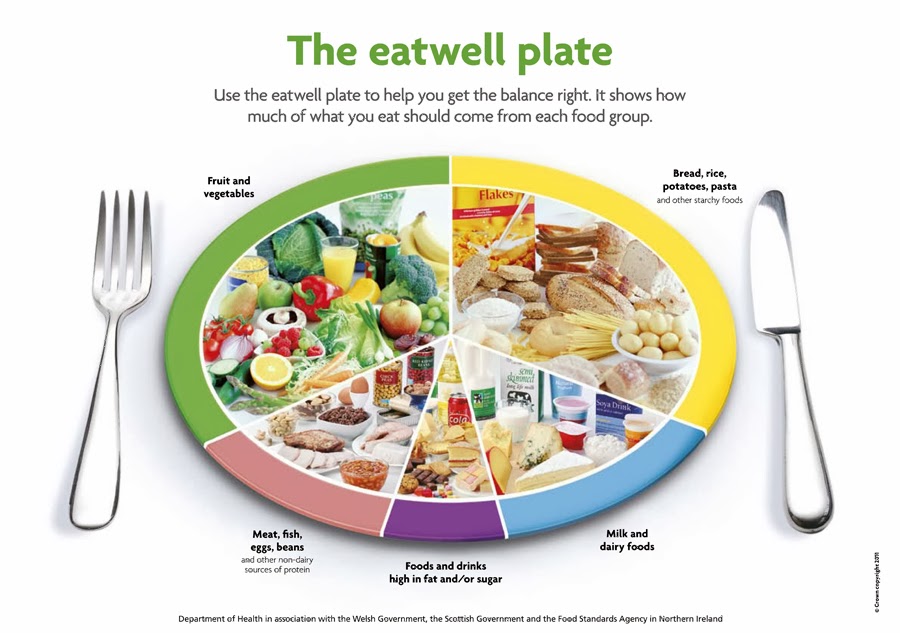
Based on the Eat Well Plate this would mean your day would
look like:
I serving of essential fats – such as 1 heaped tablespoon
for ground seeds or olive oil
3 servings of Protein – such as beans, lentils, quinoa,
fish, tofu, seed vegetables or lean meat
4 servings of complex carbohydrate foods – whole grains such
as brown rice, wholemeal bread, pasta, quinoa, oats and baked potatoes with
skins on.
6 servings of fresh fruit, such as apples, pears, bananas
(no more than one), berries, melons or citrus fruit and dark green, leafy root vegetables
such as watercress, carrots, sweet potatoes, broccoli, spinach, green beans,
peas and peppers.
Subscribe to:
Posts (Atom)